
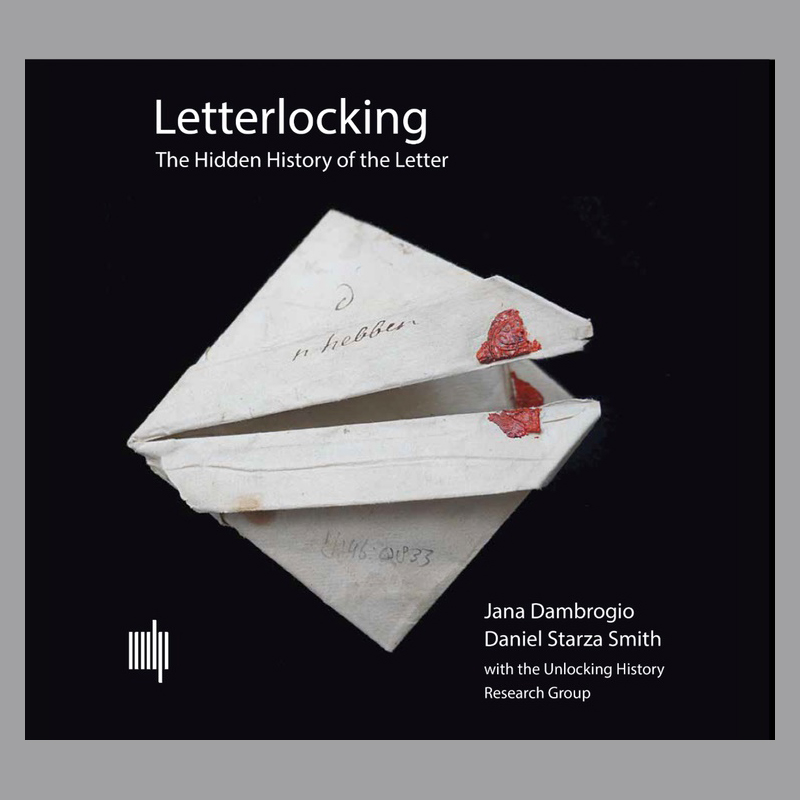
Letterlocking: The Hidden History of the Letter
For as long as people have been communicating through writing, they have found ways to keep their messages private. Before the invention of the gummed envelope in 1830, securing correspondence involved letterlocking, an ingenious process of folding a flat sheet of paper to become its own envelope, often using a combination of folds, tucks, slits, or adhesives such as sealing wax. Letter writers from Erasmus to Catherine de’ Medici to Emily Dickinson employed these techniques, which Jana Dambrogio, the MIT Libraries’ Thomas F. Peterson (1957) Conservator, has named “letterlocking.”
Published by MIT Press, the 528-page book contains more than 300 images and diagrams, and explores the practice’s history through real examples from all over the world. It includes a dictionary of 60 technical terms and concepts, systems the authors developed while studying more than 250,000 historic letters.
…

