
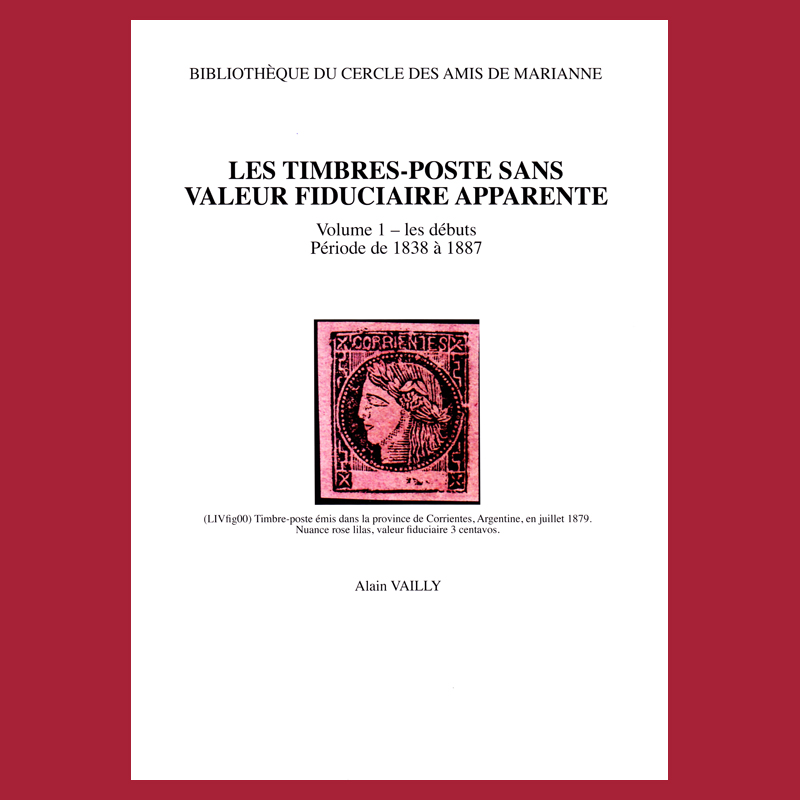
Les timbres-poste sans valeur fiduciaire apparente
This book is dedicated to the description of stamps with no apparent fiduciary value, issued between 1838 and 1887, in some thirty countries across five continents. Furthermore, whenever possible, bibliographic references are included, allowing the reader the opportunity to consult the original sources.
Among the issues presented, some are little known, or even completely unknown, and the number of their postage stamps can be counted on one hand. This is the case, for example, for Cauca in Colombia, Jammu and Kashmir in India, and the Mexican cities of Cuernavaca and Cuautla. Along the same lines, we can also mention New South Wales, with what must be considered the world’s first postal stationery. Alongside these rare and unusual stamps are more familiar ones, such as the Britannia-type issues from the British colonies of Barbados, Mauritius and Trinidad, Austrian newspaper stamps, official Spanish stamps and even some Russian Zemstvos, among many others!
The study of the production of postage stamps with no apparent fiduciary value is divided into five categories, based on the possible answers to the question “Why were they issued without face value?” A geographical index and a chronological index will allow readers to locate the countries on a world map and place the issues in their historical context.
This book is an essential (and unique) tool for anyone who wants to learn about these postage stamps with no apparent value. This technique (of masking the value) is now used in more than one hundred countries worldwide. The postage stamps presented here are, in a way, the forerunners of those used today!
Handbook cover, A4 format in colour, 230 pages, over 650 images, 100 copies printed, price €25 + postage. Availability: alain@vailly.fr
…

